Whole-Home Appliance + Backup Power Buying Checklist
Outfitting a whole home means buying two things at once: the appliances themselves and a backup power plan that keeps the essential ones running when the grid fails. The checklist is simple: protect the refrigerator first (it has the most to lose in a blackout), then decide how much of the rest you want to cover. Size each option from measured combined average watts, required hours, startup surge and voltage. Capacity alone cannot guarantee a fridge or a set of household loads for a day. Below is the full checklist plus the appliance-and-power pairings we recommend.
The cross-vertical comparison
Illustrative capacity/output tiers, not guaranteed coverage or duration. Calculate combined average watts and required hours, then check startup surge, voltage and installation requirements.
| Example Tier | Loads to Evaluate | Capacity Example | Output Example | Station Example |
|---|---|---|---|---|
| Tier 1: Fridge only | Refrigerator + phones | ~1,000 Wh | 600 W+ | EcoFlow Delta 2 |
| Tier 1+: Fridge + extras | Fridge, lights, devices | ~1,200 Wh | 1,500 W+ | Jackery Explorer 1000 Plus |
| Tier 2: Fridge + essentials | Fridge, freezer, CPAP | ~2,000 Wh | 2,400 W+ | Bluetti AC200L |
| Tier 3: Heavy loads | Fridge + AC or pump | ~4,000 Wh | 4,000 W+ | EcoFlow Delta Pro 3 |
| Tier 3+: Whole-home | Multiple big loads | ~3,800 Wh | 6,000 W+ | Anker SOLIX F3800 |
Our picks across verticals

Samsung RF28R7351SR
A mainstream French-door refrigerator, the one appliance every backup plan must cover, since a blackout costs you a fridge full of food first.
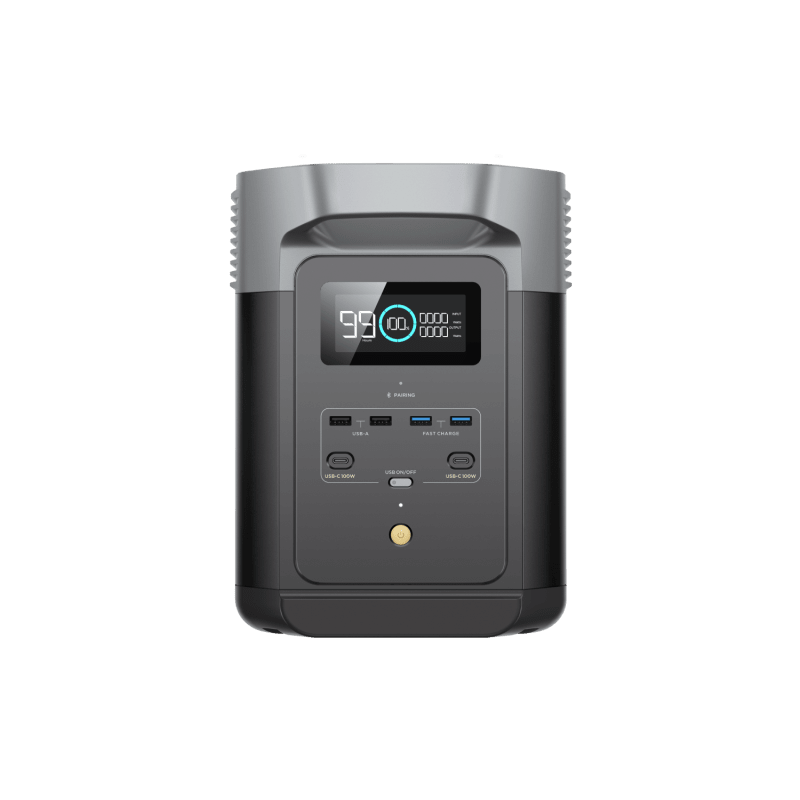
EcoFlow Delta 2
1,024Wh / 1,800W is a capacity/output example. At 150W average and 85% efficiency it estimates 5.8 hours for the fridge alone; phones and other loads shorten that.
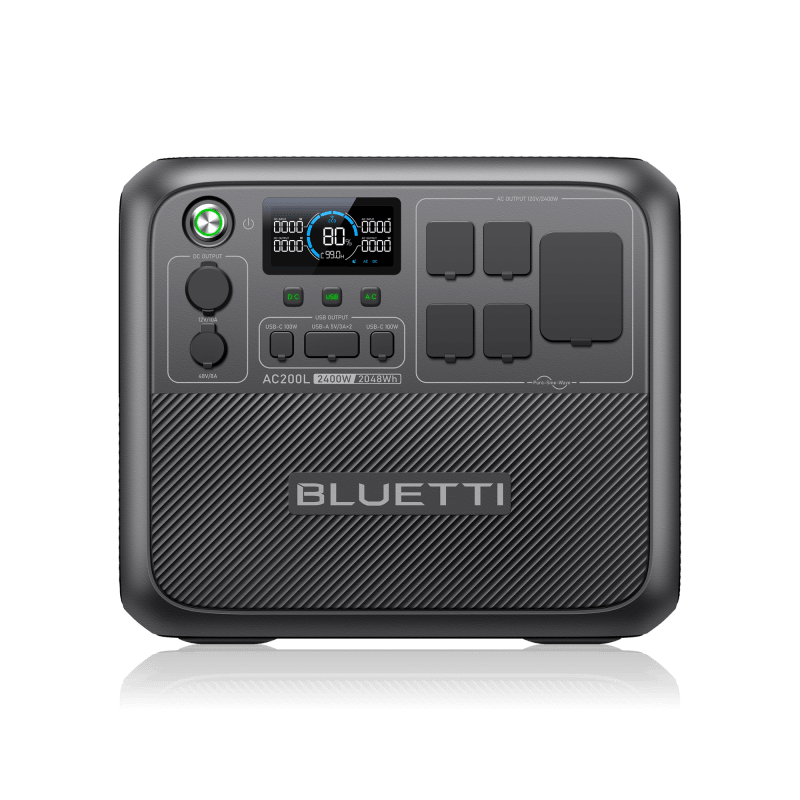
Bluetti AC200L
2,048Wh / 2,400W offers more capacity, but runtime depends on the combined measured load. At 300W average and 85% efficiency it estimates 5.8 hours, not a guaranteed full day. Follow model-specific home CPAP backup instructions.
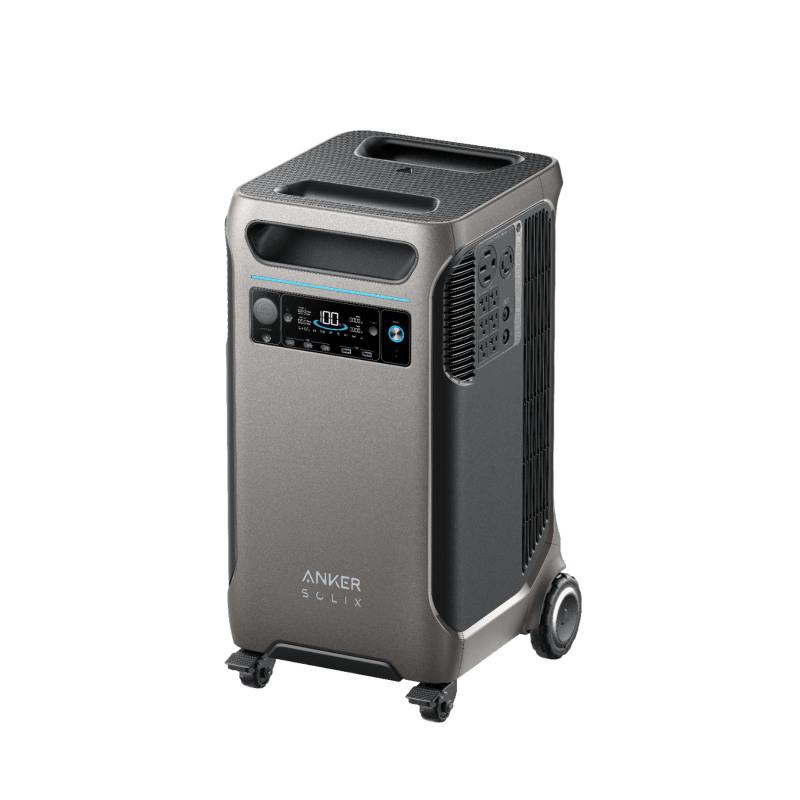
Anker SOLIX F3800
3,840Wh / 6,000W supports a larger planned load. Check total running watts, startup surge and 120V/240V compatibility; use a properly installed transfer system for household circuits and never backfeed an outlet.

GE GNE27JYMFS
A reliable, efficient French-door fridge whose modest running watts stretch every Wh of your power station further during an outage.
Go deeper
Frequently Asked Questions
What appliances should I back up first in a power outage?+
Start with your household emergency and medical backup plan, then refrigeration, lighting and communications. Check each appliance startup surge and running load; not every station can start a fridge. Monitor food temperature and follow USDA outage guidance.
How big a power station do I need for whole-home backup?+
Calculate required energy as combined average watts × hours, then allow for conversion losses and reserve. Separately check continuous output, surge and voltage. For example, a 300W average load uses 7,200Wh in 24 hours before losses; a 2,048Wh station cannot provide that full day alone.
Is a portable power station better than a gas generator for a home?+
Choose from measured load energy and safe installation requirements. Battery stations produce no combustion exhaust, but require the model’s dry, ventilated operating conditions and can make fan noise. Gas generators operate outdoors at least 20 feet from buildings with exhaust directed away. Neither capacity nor panel wattage guarantees days of household backup.
Should I buy energy-efficient appliances to make backup easier?+
It helps. An efficient refrigerator draws fewer watts, which directly stretches how long your power station runs it in an outage: an efficient fridge on a 1kWh station can outlast a thirstier model by hours. Efficiency lowers both your utility bill and the size of the backup power you need to buy.
Can I expand my backup power later instead of buying it all at once?+
Yes. Units like the Bluetti AC200L and EcoFlow Delta Pro 3 accept add-on batteries, so you can start by protecting the refrigerator and scale capacity as your budget allows. That makes the tiered approach in our checklist a buy-now, grow-later plan rather than a single large purchase.
HomeGear Here may earn a commission on purchases made through links on this page. Prices and availability are subject to change. Wattage and runtime figures are estimates to guide sizing, not guarantees.