Loading
Category
Solar Panels
Portable solar panels are simple hardware with one persistent trap: a panel that is electrically fine for your station may still not plug into it. Connector type and voltage window cause more failed purchases here than panel quality does.
Data coverage: 1 of 9 products have a verified live price. Newest price check . Price-state and stale-data rules
Products
9
From
$199
Avg Price
$464
Brands
5




Buying Guide
How to choose solar panels
Connector type is the usual mismatch
Panels terminate in MC4, XT60, Anderson or a proprietary plug depending on maker, and stations expect a specific one. Adapters exist and are cheap, but they have to be the right adapter, rated for the current. Confirm what your station's solar input port takes before buying a panel from a different brand.
Voltage window, not just wattage
A station's charge controller accepts solar input within a stated voltage range. A panel below the minimum will not start charging; above the maximum risks damage. Wiring several panels in series raises voltage and in parallel raises current, so how you combine panels matters as much as how many you buy.
Rated output versus what you will see
The wattage on the label is measured under standard test conditions. Expect meaningfully less in practice, and less again if the panel is flat on the ground rather than angled at the sun. Repositioning a panel a couple of times a day does more for daily yield than buying a modestly larger one.
Foldable or rigid, and the kickstand
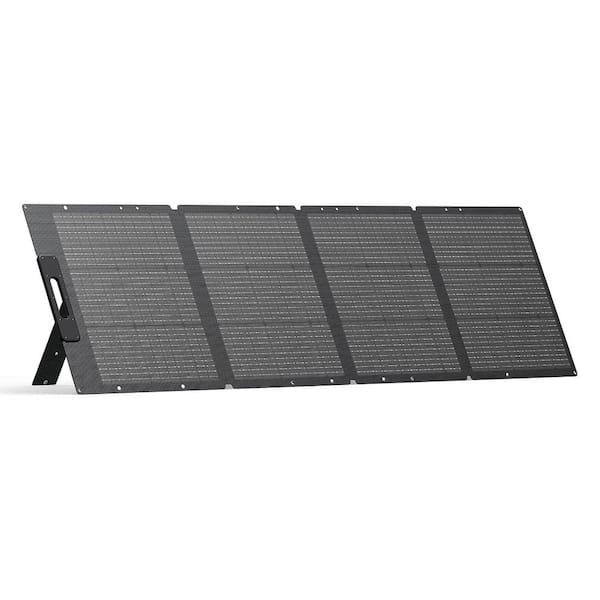
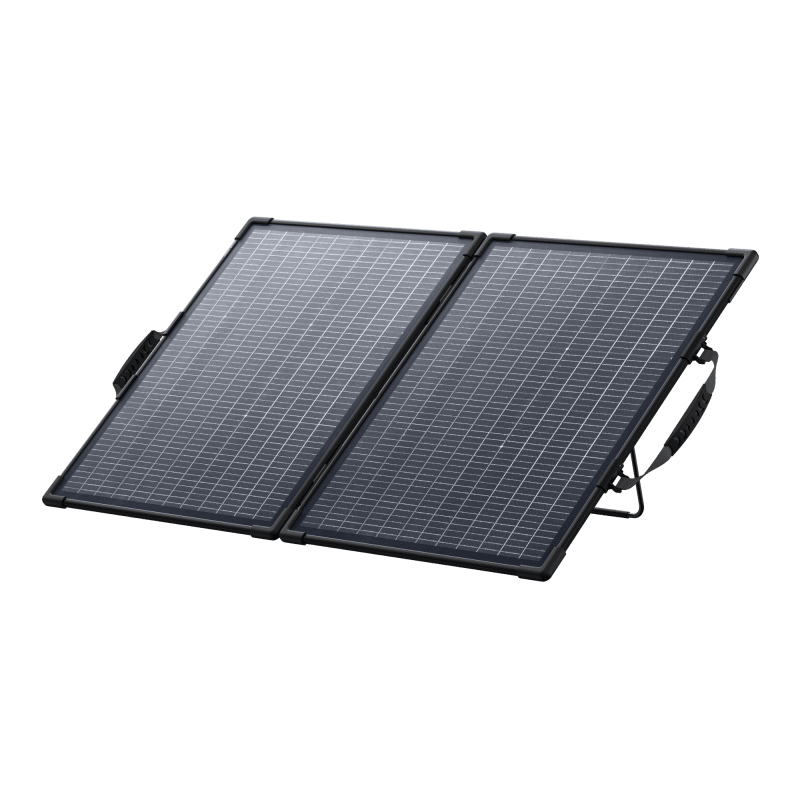
Foldable panels pack away and suit occasional use and travel; rigid panels suit a semi-permanent installation. For foldables the kickstand quality is the underrated detail: one that holds a proper angle in a breeze is the difference between rated output and a panel lying flat.
Weather rating
Most portable panels tolerate rain but are not designed to be left outdoors indefinitely, and the junction box is usually the weak point. Check the stated ingress rating if the panel will live outside rather than being deployed and packed away.
More depth: solar against a gas generator.
Solar Panels
Frequently Asked Questions
Will any solar panel work with any power station?+
No. Three things have to line up: the connector, the voltage range the station's charge controller accepts, and the maximum input current. Adapters solve the connector, but a panel outside the voltage window will either not charge or risk damage, so check the station's solar input specification first.
Why does my solar panel produce less than its rating?+
Ratings are measured under standard test conditions: direct perpendicular sunlight and a cool panel. Real conditions involve haze, heat, dust and imperfect angles, all of which reduce output. A panel lying flat instead of angled toward the sun loses a substantial share of its potential on its own.
Should I wire panels in series or parallel?+
Series adds voltage while keeping current the same; parallel adds current at the same voltage. Which you want depends on the input window your station accepts: series can push voltage above the limit, parallel can exceed the current limit. Match the combination to the station's stated range rather than to a general rule.